Tuesday, 3 December 2013

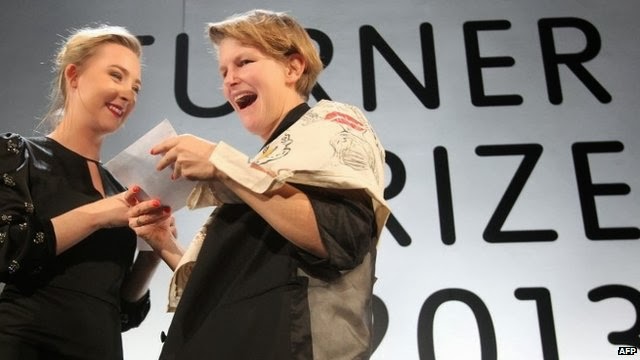
Turner Prize 2013 announced

Laire Prouvost, Turner Prize 2013 winner

It was announced on channel 4 last night, live from Londonderry, that French artist Laure Prouvost (b.1978) is this year's Turner Prize winner. Her winning piece Wantee, inspired by a cup of tea, weaves together art history and fiction in video form, taking viewers in search of her fictional grandfather - weird! She describes it as "a conversation about this idea of reality and fiction," intentionally presenting work designed to confuse as she believes misunderstanding makes us use our imagination more.

Beating humorous artist David Shrigley, performance artist Tino Sehgal and painter Lynette Yiadom-Boakye to the £25,000 prize, the latter of which I was gunning for as a painter hasn't won for years.  

Previous winners you may have heard of include Damien Hurst and Anthony Gormley.

Friday, 25 October 2013

Candy


Candy brings together the Visual Candy series by Damien Hirst (b.1965) and the candy spill work of Felix Gonzalez-Torres (1957-1996). The exhibition reveals the differing ways in which both artists explored the idea of candy during the 1990's. The spacious gallery is bursting at the seams with colour, projected from both the paintings on the walls and the individually wrapped, multi-coloured cellophane sweets on the floor.  


Gonzales-Torres's candies surround the galleries central column forming a glittering circular carpet. The work encourages the viewer to interact with it, as a viewer you are allowed to touch, take and eat the candy resulting in the works continuous state of flux. During the private view children were writing their names in sweets on the floor, one guest took it a step too far though, throwing herself into Untitled, 1992, a pile of candy in the corner, before being swiftly escorted out of the building. Gonzales-Torres said his candy spills were about letting go, refusing to make a static form just as life itself is constantly changing.

Untitled, 1992, Gonzales-Torres


Hirst's Visual Candy paintings, created between 1993 and 1995, were made in response to a critic who had slated his Spot Paintings as 'just visual candy.' Hirst's paintings such as Some Fun, 1993 and Dippy Dappy Dabby, 1993, question the idea that aesthetically pleasing art is insignificant.

Dippy Dappy Dabby, 1993, Damien Hirst

Damien Hirst and his bling chain

At first glance the paintings appear totally abstract though on closer inspection they are in fact depictions of medicinal pills, stylised representations of the psychological effects of mood-enhancing drugs. Hirst once said, 'in every painting there is a subliminal; sense of unease'; what with his paintings vibrant colours creating a feeling of surface optimism it is hard to pick up on the underlying darkness, the low that follows a high. 

The exhibition is open at Blain Southern until 30 November 2013 if you fancy some sweets!

Wednesday, 16 October 2013

Friezzzzze


Appropriately named given the onset of this cold weather, Frieze London and Frieze Masters, located within walking distance of each other in Regents Park, open tomorrow and continue until Sunday. 

Frieze London is one of the only fairs focusing solely on contemporary art and living artists, mainly post year 2000. The fair is divided into three sections with most galleries located in the 'Main Gallery' section, the others can be found in 'Focus' and 'Frame'. All galleries in Focus have solo shows or curated projects and have only been open since 2001, the works of which have never been exhibited at an art fair before. Frame is dedicated to solo artist presentations by galleries that have been in existence for less than eight years and present a regular programme of exhibitions.


Only in it's second year, Frieze Masters displays work made before year 2000, providing an interesting old and new art comparison. The fair is divided into two sections, again most exhibitors can be viewed in the 'Main Gallery' while 'Spotlight' is for those with solo 20th-century artist presentations.

This years Frieze Sculpture Park is it's largest to date, incorporating works from both fairs by some of the most acclaimed contemporary sculptors, alongside historical pieces dating back to the medieval period. Sculptures by Joan Miro, Helen Chadwick, Judy Chicago, Rachel Whiteread, plus many more are on display.

The Art Newspaper is also producing daily papers at both fairs so be sure to pick up a copy if you manage to pop down.

Saturday, 21 September 2013

Time Out Takeover


Make sure to pick up an issue of Time Out this Tuesday as I'm in it! To celebrate the anniversary of Time Out becoming a free magazine, the edition published on September Tuesday 24th is being compiled by it's readers - one of which is me.


Friday, 13 September 2013

Genesis


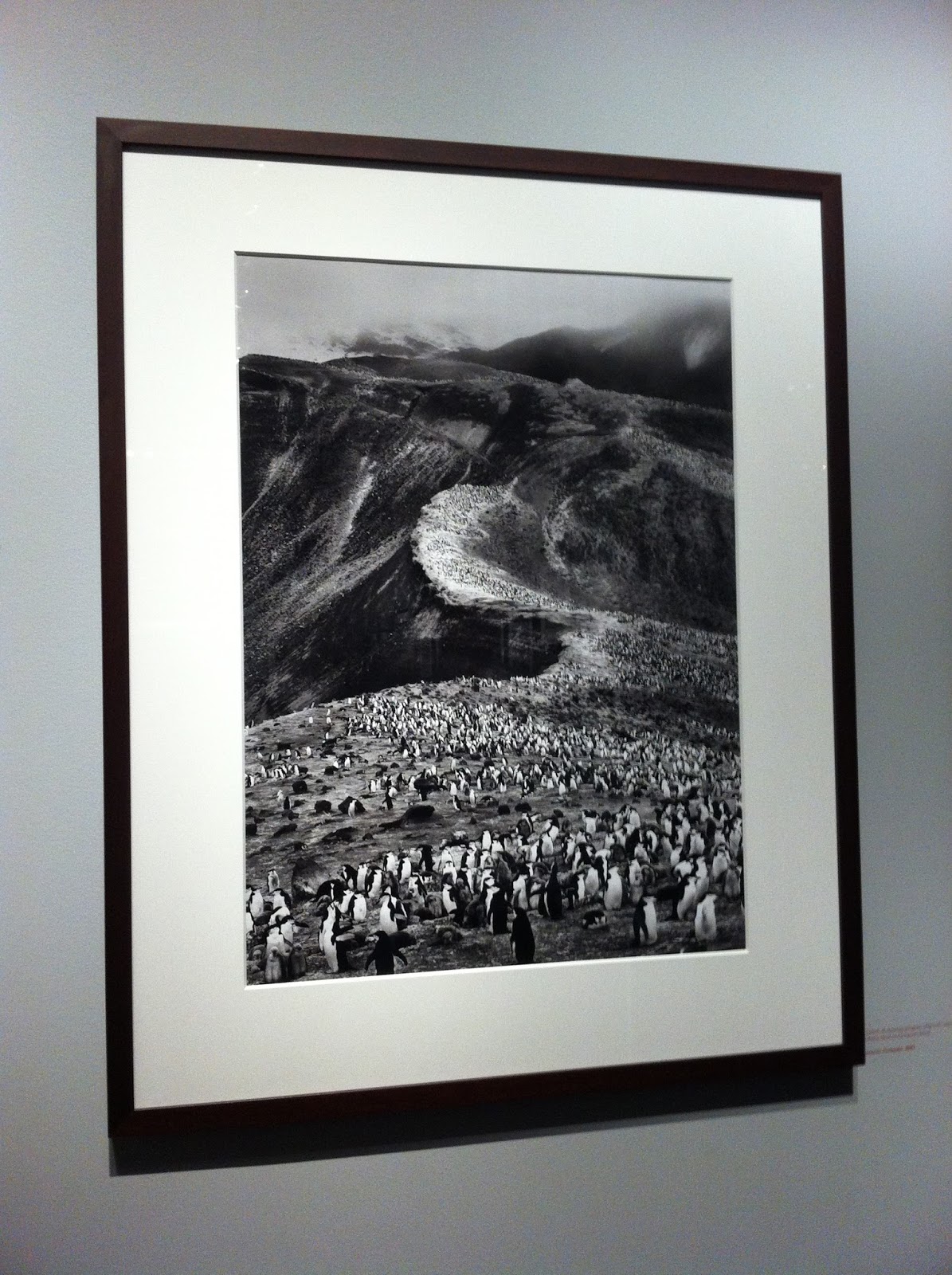
Knowing Sebastiao Salgado's exhibition 'Genesis' was closing at The Natural History Museum on September 8th, I raced down there the Saturday before last to see it - most unlike me on such a sunny day!

Sebastiao Salgado is a documentary photographer who has explored the displacement and alienation of communities from their natural environments and traditional ways of life as industrialisation has spread. Integral to his work has been his observation of the relationship between humans and our planet.


With Genesis however, Salgado focuses on the natural world for the first time, inviting us to reflect on our own lifestyles and the impact we have on the planets natural resources. This is something that is at the heart of the Natural History Museum's work which has 300 scientists working on projects around the world to improve our understanding of the Earth's diversity in the hope that they can enable and inspire better care of our planet. The photographs document environments that have great scientific importance as well as aesthetic appeal, showing off our planets diversity, something for which we are all responsible.

The exhibition is the culmination of 8 years of travel around the world photographing its remaining pristine environments. 


Most of Salgado's previous work has focused on people, labour and migration though here he has chosen to work with wilderness, plants, animals and people. The reason being he grew up on a big farm in a part of Brazil that used to be more than 60% rainforest though in the early 1990's, when he and his wife Lélia decided to move back, only 0.3% of it remained. Since then they have planted a forest which now has almost 2 million trees. 


Genesis is Salgado's way of presenting the planet in his language, 'Photography.' The exhibition is divided up into 5 sections, Africa (my favourite), Planet south, Amazonia and Pantanal, Northen Spaces and Sanctuaries. Most of which depict extremely unforgiving and inhospitable environments, focusing on traditional lifestyles that enable their inhabitants survival. Salgado wanted to experience living with people with real links to nature, illustrated through his photos of tribes in rain forests and the Nenets in Siberia. We and the natural world are so closely tied together though the majority of us live in cities completely cut off from it, managing to do it more harm than good, something Salgado is desperate for people to become more aware of.


Friday, 9 August 2013

Keep your eyes peeled...

John William Waterhouse, The Lady of Shalott, 1888

As part of 'Art Everywhere,' 57 masterpieces have been selected through a public vote to appear on 22,000 billboards, bus stops and other sites as part of a nationwide open-air art exhibition. Paintings by artists such as David Hockney and Lucien Freud will be on display across the country between 12-25 August.

The founder Richard Reed said 90% of the population are likely to see the posters saying, "if we can't get the average guy in the street to go into a gallery, maybe we can get the art from the gallery into the street." A billboard is democratic and for everyone though is usually just there to sell things. The aim of this project is primarily for the posters to get noticed and to bring a smile to peoples faces, people don't have to buy anything just look.

'The Lady of Shalott' by Victorian artist John William Waterhouse was the most popular choice in the online vote with works by Francis Bacon, John Singer Sargent, Lucien Freud, JMW Turner and LS Lowry making the top 10.

Lucian Freud, Man's head, Self Portrait, 1963

In order for Art Everywhere to happen the advertising industry has donated poster sites, with other costs being met by The Tate, The Art Fund and a public funding campaign. So far the campaign has raised £133,000 of its £200,000 target.

See how many you can spot over the next couple of weeks. Feel free to keep me posted (forgive the pun) by writing a comment in the comments section below this post.

Here is one I spotted in Sainsbury's car park this morning...

Sir Henry Raeburn, Revd Robert Walker
Skating on Duddingston Loch, 1795

Friday, 2 August 2013

Serpentine Gallery Pavilion

Serpentine Gallery Pavilion, Sou Fujimoto, 2013

With the recent heat wave, many of you may have already spotted the latest Serpentine Gallery Pavilion while picnicking in Hyde park. A couple of weeks ago, after a short stint on one of the Serpentines pedalos, I stopped off to have a look. 

The temporary structure is designed by the Japanese architect Sou Fujimoto, the 13th (and at 41 the youngest) architect to do so. The annual Pavilion commission is one of the worlds most ambitious architectural programmes - after seeing the 12 previous designs online I really wish I had seen more of them in the flesh, there has been quite a range of funky looking structures!

Sou Fujimoto is becoming well known for his light and delicate structures and is widely acknowledged as one of the worlds most up and coming architects. Mainly inspired by organic structures his signature buildings seem to inhabit a space between nature and artificiality, re-inventing our relationship with the built environment.

The light and airy construction occupies around 350 square metres of lawn in front of the gallery. Comprised of layers of 20mm steel poles a kind of lattice is created, giving it a lightweight and semi-transparent appearance that allows it to blend like a cloud into the landscape. Mr Fujimoto wanted it to be a multi-purpose and social space, this is clearly demonstrated by the Fortum and Mason cafe situated inside, encouraging visitors to go in and interact with the space. I highly recommend a glass of rosé upon it on a summers afternoon.


The pavilion will be there for the next three months.