Friday, 13 September 2013

Genesis


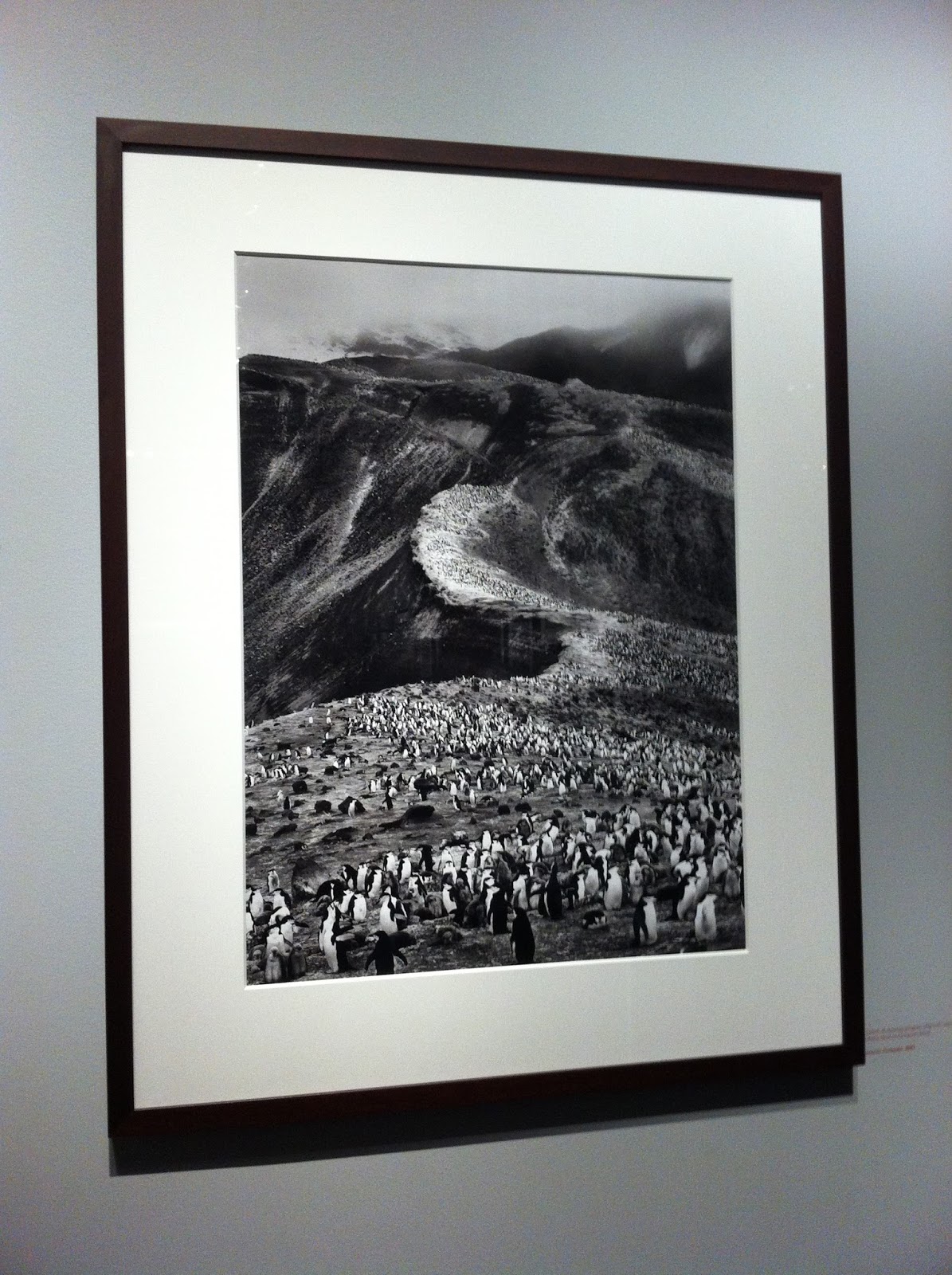
Knowing Sebastiao Salgado's exhibition 'Genesis' was closing at The Natural History Museum on September 8th, I raced down there the Saturday before last to see it - most unlike me on such a sunny day!

Sebastiao Salgado is a documentary photographer who has explored the displacement and alienation of communities from their natural environments and traditional ways of life as industrialisation has spread. Integral to his work has been his observation of the relationship between humans and our planet.


With Genesis however, Salgado focuses on the natural world for the first time, inviting us to reflect on our own lifestyles and the impact we have on the planets natural resources. This is something that is at the heart of the Natural History Museum's work which has 300 scientists working on projects around the world to improve our understanding of the Earth's diversity in the hope that they can enable and inspire better care of our planet. The photographs document environments that have great scientific importance as well as aesthetic appeal, showing off our planets diversity, something for which we are all responsible.

The exhibition is the culmination of 8 years of travel around the world photographing its remaining pristine environments. 


Most of Salgado's previous work has focused on people, labour and migration though here he has chosen to work with wilderness, plants, animals and people. The reason being he grew up on a big farm in a part of Brazil that used to be more than 60% rainforest though in the early 1990's, when he and his wife Lélia decided to move back, only 0.3% of it remained. Since then they have planted a forest which now has almost 2 million trees. 


Genesis is Salgado's way of presenting the planet in his language, 'Photography.' The exhibition is divided up into 5 sections, Africa (my favourite), Planet south, Amazonia and Pantanal, Northen Spaces and Sanctuaries. Most of which depict extremely unforgiving and inhospitable environments, focusing on traditional lifestyles that enable their inhabitants survival. Salgado wanted to experience living with people with real links to nature, illustrated through his photos of tribes in rain forests and the Nenets in Siberia. We and the natural world are so closely tied together though the majority of us live in cities completely cut off from it, managing to do it more harm than good, something Salgado is desperate for people to become more aware of.


Friday, 9 August 2013

Keep your eyes peeled...

John William Waterhouse, The Lady of Shalott, 1888

As part of 'Art Everywhere,' 57 masterpieces have been selected through a public vote to appear on 22,000 billboards, bus stops and other sites as part of a nationwide open-air art exhibition. Paintings by artists such as David Hockney and Lucien Freud will be on display across the country between 12-25 August.

The founder Richard Reed said 90% of the population are likely to see the posters saying, "if we can't get the average guy in the street to go into a gallery, maybe we can get the art from the gallery into the street." A billboard is democratic and for everyone though is usually just there to sell things. The aim of this project is primarily for the posters to get noticed and to bring a smile to peoples faces, people don't have to buy anything just look.

'The Lady of Shalott' by Victorian artist John William Waterhouse was the most popular choice in the online vote with works by Francis Bacon, John Singer Sargent, Lucien Freud, JMW Turner and LS Lowry making the top 10.

Lucian Freud, Man's head, Self Portrait, 1963

In order for Art Everywhere to happen the advertising industry has donated poster sites, with other costs being met by The Tate, The Art Fund and a public funding campaign. So far the campaign has raised £133,000 of its £200,000 target.

See how many you can spot over the next couple of weeks. Feel free to keep me posted (forgive the pun) by writing a comment in the comments section below this post.

Here is one I spotted in Sainsbury's car park this morning...

Sir Henry Raeburn, Revd Robert Walker
Skating on Duddingston Loch, 1795

Friday, 2 August 2013

Serpentine Gallery Pavilion

Serpentine Gallery Pavilion, Sou Fujimoto, 2013

With the recent heat wave, many of you may have already spotted the latest Serpentine Gallery Pavilion while picnicking in Hyde park. A couple of weeks ago, after a short stint on one of the Serpentines pedalos, I stopped off to have a look. 

The temporary structure is designed by the Japanese architect Sou Fujimoto, the 13th (and at 41 the youngest) architect to do so. The annual Pavilion commission is one of the worlds most ambitious architectural programmes - after seeing the 12 previous designs online I really wish I had seen more of them in the flesh, there has been quite a range of funky looking structures!

Sou Fujimoto is becoming well known for his light and delicate structures and is widely acknowledged as one of the worlds most up and coming architects. Mainly inspired by organic structures his signature buildings seem to inhabit a space between nature and artificiality, re-inventing our relationship with the built environment.

The light and airy construction occupies around 350 square metres of lawn in front of the gallery. Comprised of layers of 20mm steel poles a kind of lattice is created, giving it a lightweight and semi-transparent appearance that allows it to blend like a cloud into the landscape. Mr Fujimoto wanted it to be a multi-purpose and social space, this is clearly demonstrated by the Fortum and Mason cafe situated inside, encouraging visitors to go in and interact with the space. I highly recommend a glass of rosé upon it on a summers afternoon.


The pavilion will be there for the next three months.

Thursday, 25 July 2013

Big Blue Bird

Hahn/Cock, Katharina Fritsch, 2013

This morning Boris Johnson unveiled a giant 15ft blue cockerel entitled 'Hahn/Cock' by German artist Katharina Fritsch - the latest sculpture to take roost on Trafalgar square's forth plinth for the next 18 months. The forth plinth was originally intended to hold an equestrian statue of William IV but due to insufficient funds remained bare for over 150 years. In 1999 the decision was made that it would be used for the temporary display of artworks.

My colleague went down to watch the unveiling this morning, reporting Boris to have been careful to avoid the English half of the sculptures title. He concluded his speech with a dig at David Cameron saying in the future googling the sculptures name would lead to computer meltdown after the prime minister called for greater internet censorship earlier in the week. Jon Snow, broadcaster and member of the fourth plinth commissioning group, said he admired the cockerel's distinguished flurry of tail feathers which point towards the National Gallery. 

The sculpture symbolises regeneration and strength though has been criticised for it's gallic reference, placed right next to Nelson's Column. Boris was having none of it hailing the suitability of it's colour after the birth of our Royal Prince!

Last night I happened to be cycling past so took a photo of him all lit up...

Monday, 8 July 2013

Leonardo Drew

Leonardo Drew, b. 1961

Having started work at The Art Newspaper I have been very bad at taking advantage of the invitations to private views we receive. Last week I finally managed to go on a bit of a team bonding trip to the Leonardo Drew exhibition at Vigo Gallery, the second solo show of wall-based sculptures by the Brooklyn based artist. 

Drew is known for his reflective and abstract sculptural installations which incorporate natural and man-made materials such as fabricated wood, tree branches, roots, paper, raw cotton, rust, random found objects and mud. The resulting effect is exceedingly tactile while the combination of the man-made and natural creates a feeling of them working in both harmony and opposition, battling against each other while simultaneously coming together.


Some of his installations, not on show in this exhibition, are composed solely of urban debris, collected by people who live on the street for $50 per bag. Drew re-examines and re-invents the objects and materials he uses, often loading his work with multiple African American historical, cultural and social connotations. His work draws on the cyclical and transient nature of life - decay and resurrection playing a central and recurring role throughout his work.


All works illustrated above were made this year and are composed of found wood. If you like what you see and are feeling flush, prices range from around £35,000 up to £95,000. 

The exhibition runs until July 26th 2013

Thursday, 4 July 2013

Preview

Marcel Storr, Untitled, 1973

Very excitingly this month I got the chance to write my first preview for The Art Newspaper's July/August issue. The 'Alternative Guide to the Universe' is on at The Hayward Gallery until August 26th - here is a link to it...


Tune in for my September preview on the RA's 'Australia' exhibition which should be a little longer. 

Friday, 10 May 2013

Frieze New York


Frieze New York returns this week for a second time, opening its doors yesterday on Randall's Island Park in Manhattan where it will remain open to the public until Monday. The Fair features over 180 of the worlds most exciting contemporary art galleries from 33 different countries. Additionally there is a 'Focus and Frame' section in which emerging galleries (galleries less than 10 years old) are exhibiting. TAN also has it's own office at the Fair where several of our London and NY team are frantically producing a daily paper, keeping visitors up to date with the goings on.

The Fair is housed in a unique bespoke structure overlooking the East River, designed by SO - IL architects. Located adjacent to the fair is The Sculpture Park where works by both established and emerging artists can be seen, one that cannot be missed standing at 80 feet high is Paul McCarthy's inflatable Balloon Dog... 

Paul McCarthy - Balloon Dog, 2013